LLLT vs hair transplant: which is better for you?
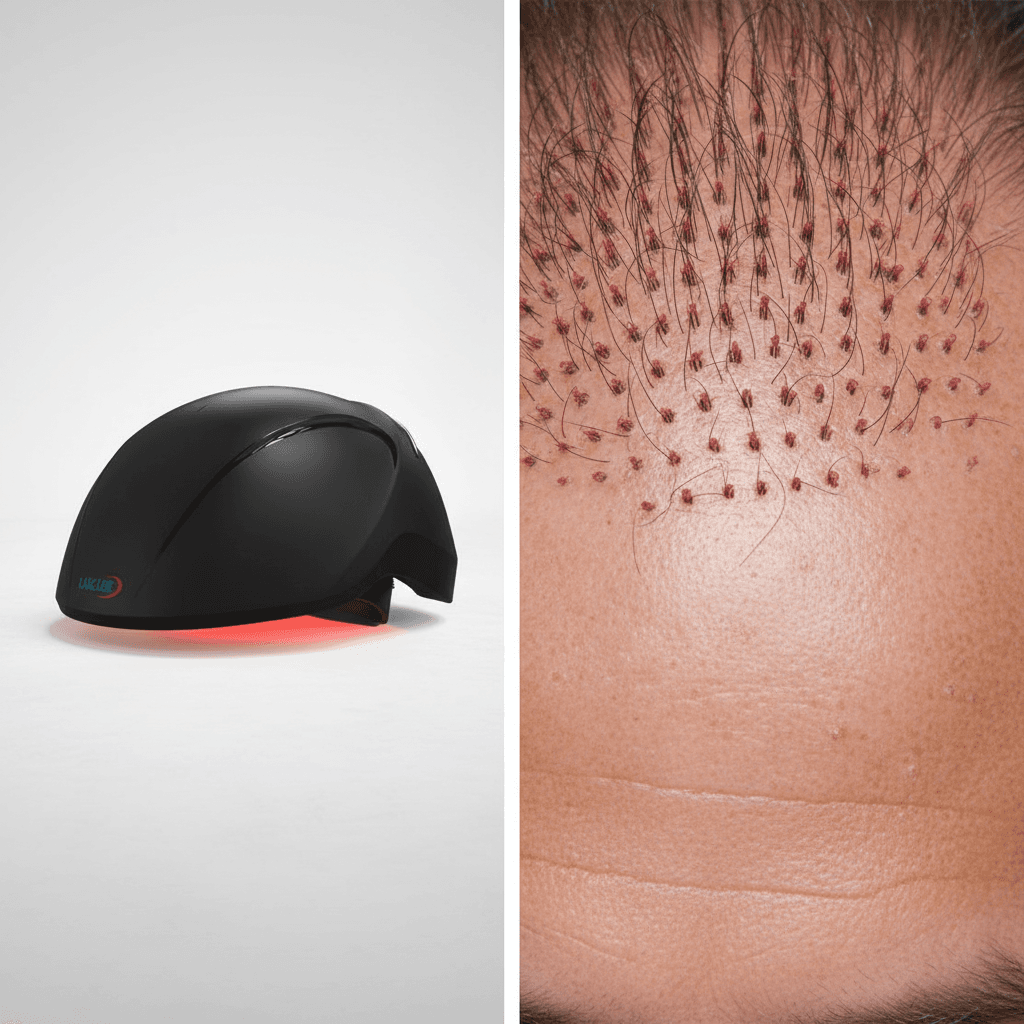
Table of contents
If you're serious about hair loss, sooner or later you'll arrive at the same question: should I go for a hair transplant, or try something else first? It's a logical consideration. A transplant is the most drastic option, but also the most visible. A laser helmet (LLLT) is the opposite: subtle, non-invasive, and relatively affordable.
I work at Lascure, so I sell laser helmets. That makes me biased, and I want to say that upfront. But precisely because of that, I'll try to be extra honest in this article. Because the answer isn't black and white — it depends on where you are with your hair loss, your budget, and what you're willing to do.
Let's be honest: transplantation is the gold standard
Let me start with something many companies selling laser helmets won't say: if your hair loss is advanced and you have the budget, a good hair transplant is probably the best option. Period.
In a FUE transplant (Follicular Unit Extraction), individual hair follicles are relocated from the donor area — usually the back of your head — to the thinning or bald areas. Because those follicles are genetically resistant to DHT (the hormone causing your hair loss), they continue to grow in their new location.
The survival rate of transplanted follicles is around 90-95% (Bernstein et al., 2016). After 12-18 months you see the full end result. A well-executed transplant can be the difference between 'I'm going bald' and 'nobody can tell.'
That said: a transplant isn't for everyone. And there are good reasons to not (yet) choose that option.
The downsides of a transplant
It sounds ideal: move hair from where it grows to where it's needed. But reality is more nuanced than the before-and-after photos on Instagram.
- The cost. A good transplant in the Netherlands or Belgium costs between €4,000 and €15,000, depending on the number of grafts. Yes, you can go to Turkey for €2,000, but the quality differences are enormous and the horror stories are real.
- It's surgery. Local anesthesia, 6-8 hours in a chair, then 2-3 weeks recovery. Scabs, swelling, no exercise. It's not life-threatening, but it's not a lunch-break procedure either.
- Not everyone is a candidate. You need sufficient donor area. If the hair around the back is also thin, you simply don't have enough 'supply' to transplant.
- It doesn't stop the underlying hair loss. This is the point many clinics underemphasize: your existing hair continues to thin from DHT. Without additional treatment (finasteride, dutasteride, or LLLT), the hair around the transplant can still fall out. Then you get an unnatural pattern — islands of transplanted hair with bald patches between them.
- A second session may be needed. After 5-10 years, a touch-up may be required, costing thousands more.
What does a laser helmet (LLLT) do?
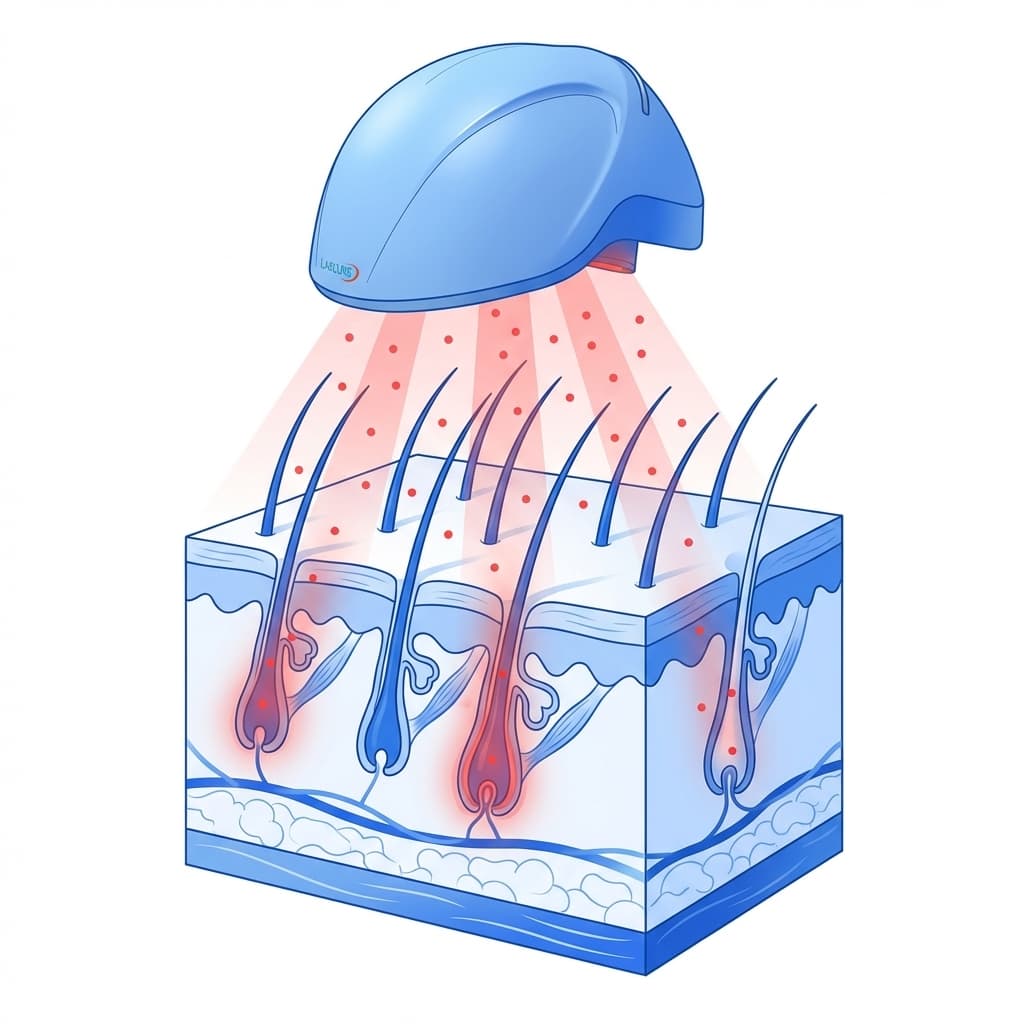
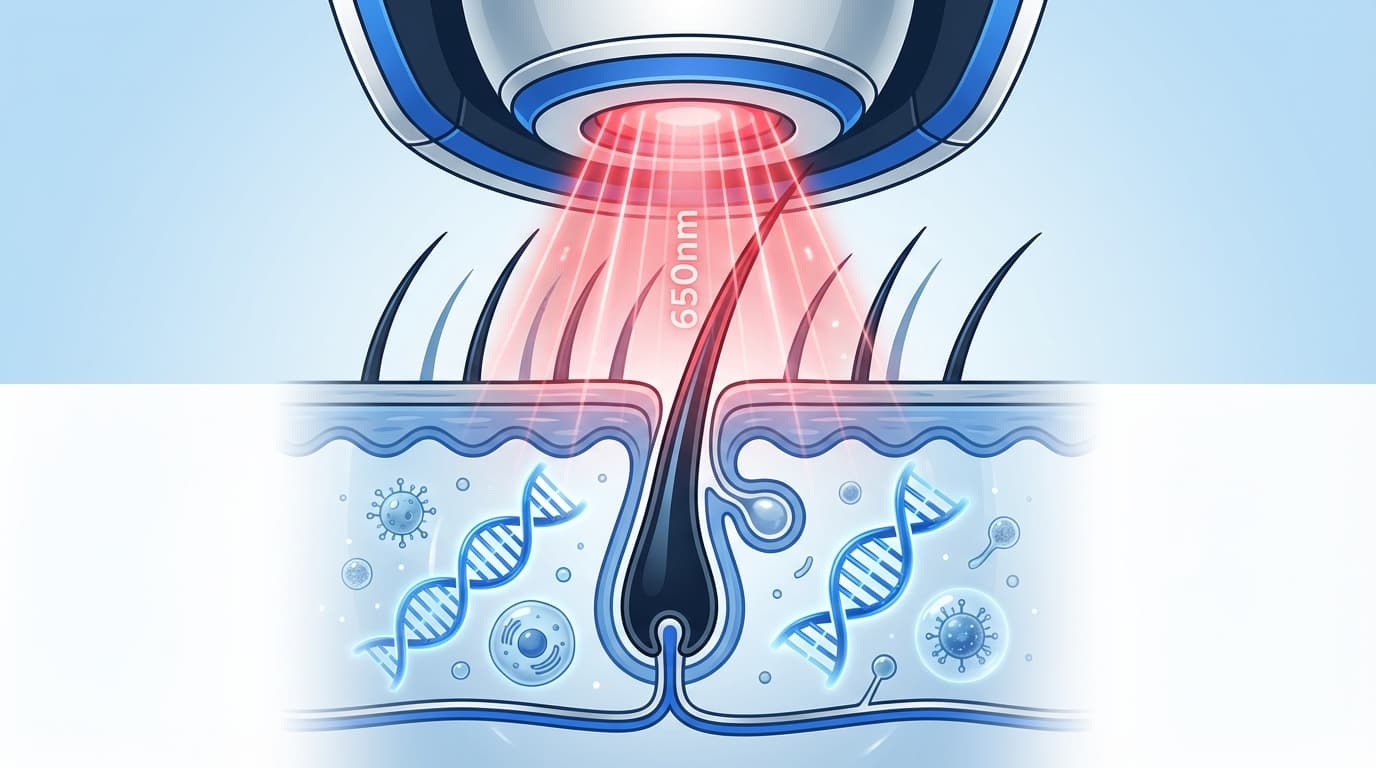
LLLT stands for Low-Level Laser Therapy. The principle: red laser light at a wavelength of 650-670nm penetrates your scalp and stimulates the mitochondria in your hair cells. This increases ATP production (your cells' energy source), causing hair follicles to stay in their growth phase longer and produce thicker hair again.
The mechanism is fundamentally different from a transplant. A transplant moves hair. LLLT stimulates the follicles you already have to function better. That means LLLT is most effective when your follicles are still active — with early to moderate hair loss.
What does the science say?
A meta-analysis by Afifi et al. (2017) analyzed 11 randomized, controlled studies and concluded that LLLT leads to a statistically significant increase in hair density. Jimenez et al. (2014) showed in a study with 269 participants that the LLLT groups had significantly better results than placebo after 26 weeks. A large-scale real-world study of 1,383 patients reported a clinical effectiveness of nearly 80%.
Important: the results of LLLT are subtler than a transplant. You won't go from Norwood 5 to a full head of hair. What you can expect: thicker, fuller hair, less shedding, and a slowdown of the process. For many people — especially in the early stages — that's exactly what they need.
The direct comparison
Haarverlies behandelingen: een vergelijking
Haartransplantatie
Type behandeling
Operatie (chirurgisch)
Kosten
€4.000 – €15.000
Herstel
2-3 weken
Permanentie
Blijvend
Pijn
Matig
Bijwerkingen
Zwelling, gevoeligheid
Laserhelm (LLLT)
Type behandeling
Thuisgebruik (gemak)
Kosten
€599 – €1.399
Herstel
Geen
Permanentie
Doorlopend gebruik
Pijn
Geen
Bijwerkingen
Geen
Let me put the two options side by side on the factors that really matter:
Effectiveness
Transplant wins. No question. A transplant can restore bald areas that no other treatment can save. 90-95% of transplanted follicles survive. The result is visible and permanent.
LLLT also scores well — 80% clinical effectiveness — but the result is different in nature. It makes existing hair thicker and slows loss. It doesn't restore completely bald areas.
Cost
LLLT wins, by far. A laser helmet costs €599 to €1,399 one-time. No ongoing costs after that. A transplant costs €4,000 to €15,000, possibly more for a second session.
Cumulatieve kosten over 5 jaar
Haartransplantatie vs. Laserhelm
Cumulatieve besparing na 5 jaar: €7.000
Convenience and comfort
LLLT wins. You put on the helmet, press start, and 15-20 minutes later you're done. Three times a week, at home on the couch. No appointment, no travel to a clinic, no recovery time.
Side effects
LLLT wins. There are no known side effects from LLLT. No pain, no scarring, no medication. A transplant can lead to swelling, sensitivity, temporary numbness, and in rare cases infection.
Permanence
Transplant wins. Transplanted follicles are genetically DHT-resistant and grow permanently. With LLLT, you need to continue treatment to maintain results.
But — and this is an important but — even after a transplant you need maintenance. Your existing hair remains susceptible to DHT. Without additional treatment, it can still fall out.
When a transplant is the right choice
- Your hair loss is significant (Norwood 4-6) with clearly bald areas
- You have the budget (at least €5,000 for a quality clinic)
- You're willing to go through surgery and recovery
- You have sufficient donor area
- You're willing to maintain your hair after the transplant with medication and/or LLLT
When a laser helmet is the right choice
- Your hair loss is in an early to moderate stage — your hair is thinning but you're not bald
- You don't want surgery (not yet, or not at all)
- You don't want to take medication and want no risk of side effects
- You're looking for an affordable option (one-time investment)
- You want to act preventively to slow further loss
- You've already had a transplant and want to protect the result
Or: use both
Here's where it gets interesting. The most powerful approach isn't choosing between the two, but combining them. And that's not just my opinion — dermatologists increasingly recommend this.
The logic: a transplant restores what's already been lost. LLLT protects what's still there and stimulates growth of both transplanted and existing hair. Combined with dutasteride — which blocks 90-98% of your DHT (Zhou et al., 2019) — you tackle hair loss from every angle.
Specifically:
- Transplant → restores bald areas
- Dutasteride or finasteride → stops the underlying cause (DHT)
- LLLT → stimulates hair growth and can accelerate post-transplant recovery
Some transplant clinics already advise their patients to use LLLT in the months following the procedure. The light therapy can improve blood flow to the scalp and support healing.
My honest advice
If you notice your hair is thinning but you're not yet bald: start with a laser helmet. Seriously. It's a fraction of the cost, there are no side effects, and you can start today. The sooner you begin, the more follicles there are left to save. Waiting until you're bald enough for a transplant is — literally — wasted time and wasted hair.
If your hair loss is already advanced and you have the budget: plan a transplant at a reputable clinic. But use LLLT afterward (and consider dutasteride via your doctor) to protect your investment.
And if a transplant isn't in your budget? Then LLLT is the best non-surgical option available. Not perfect, not magical, but proven effective and without the downsides of daily medication or solutions.
Most importantly: do something. Hair loss is progressive. Every month you wait, there are follicles going from 'dormant' to 'dead.' And a dead follicle doesn't come back — not even with a laser helmet.
Conclusion
There is no universal 'better' — only 'better for you.' The choice depends on your stage, your budget, and your willingness to undergo surgery:
- Advanced hair loss + budget? → Transplant + LLLT + dutasteride
- Early hair loss or no surgery? → Laser helmet (LLLT), possibly with dutasteride
- After a transplant? → LLLT to protect your investment
- Preventive? → LLLT — the sooner, the better
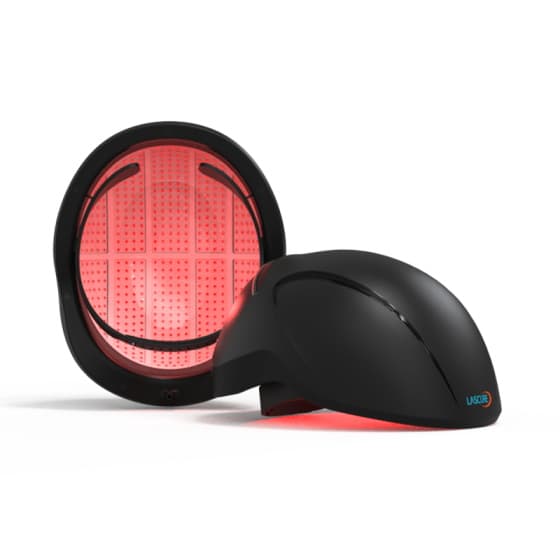
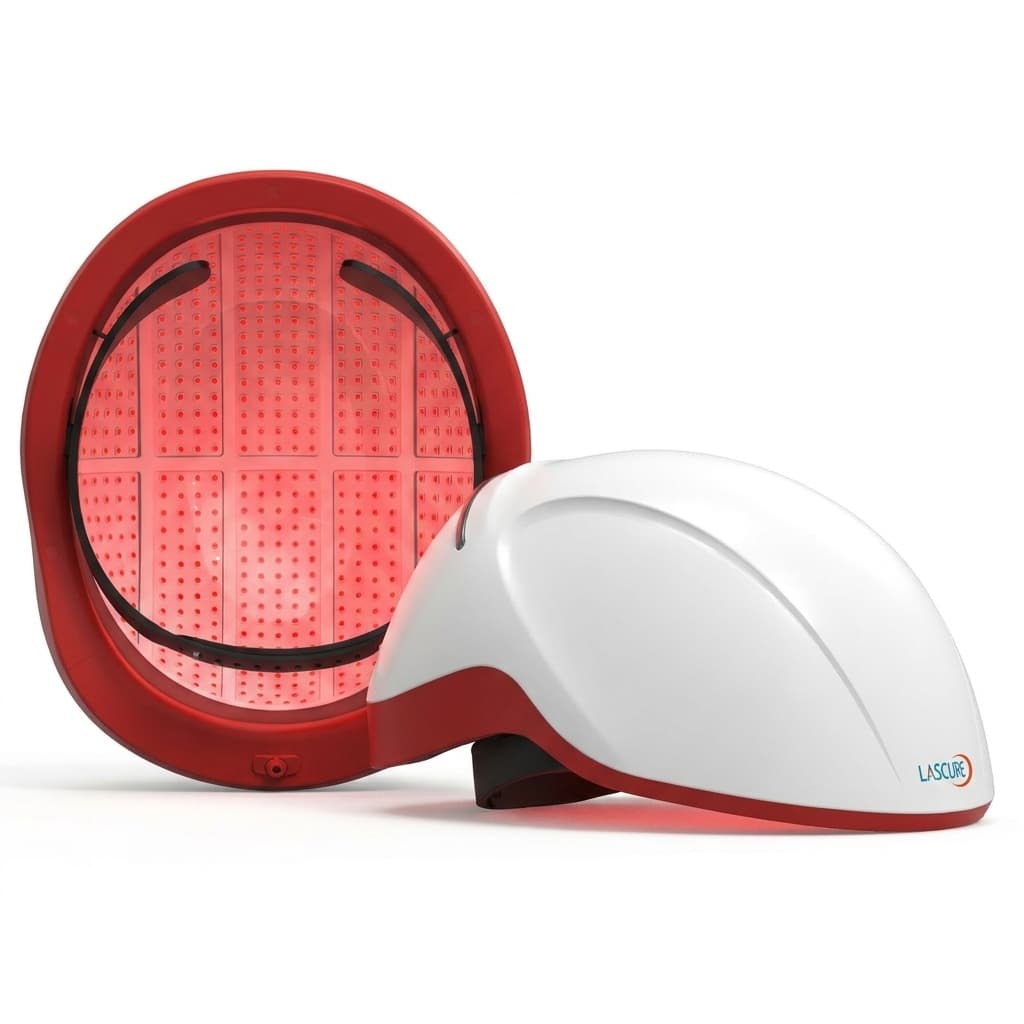
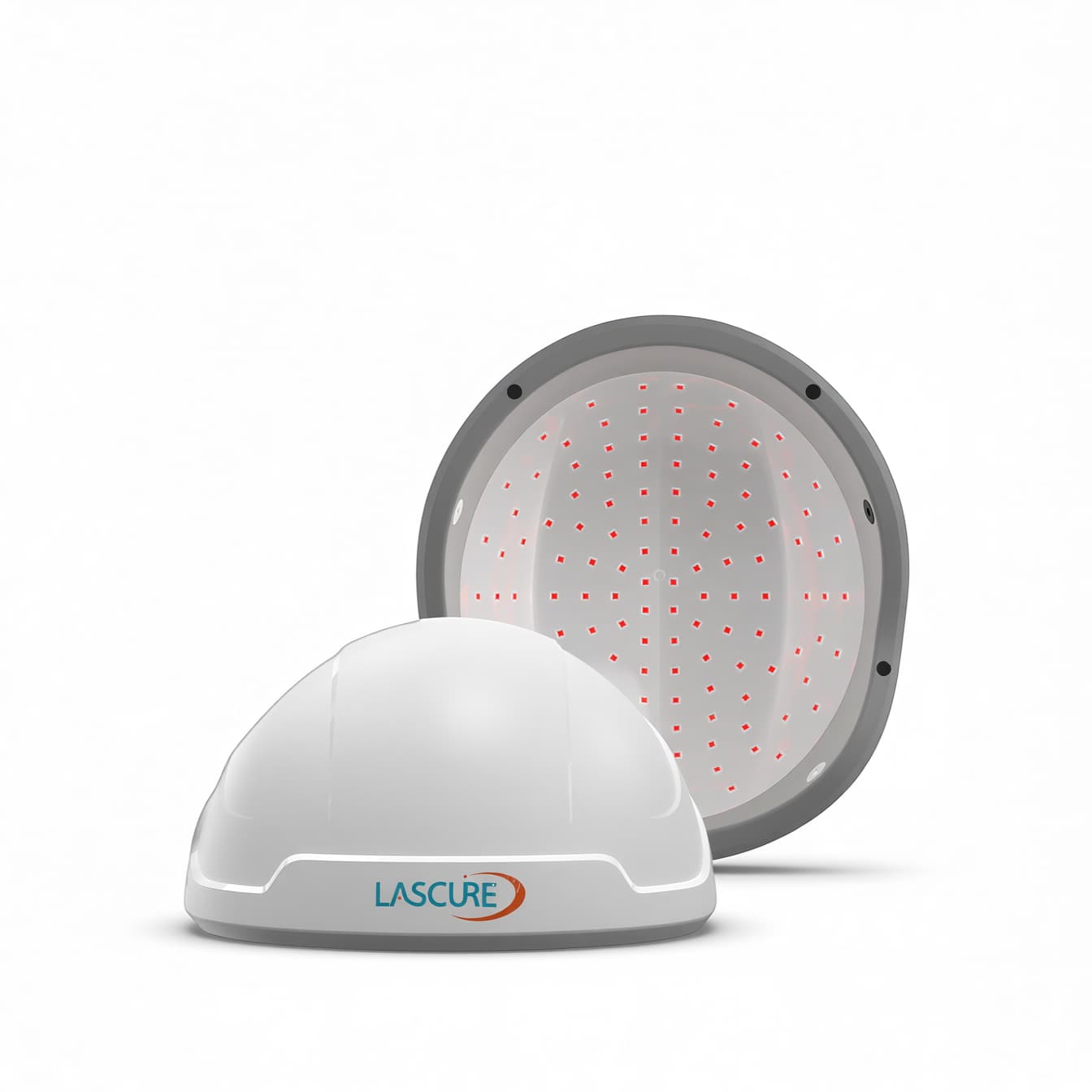
Want to know which Lascure laser helmet suits your situation? Take the product quiz or browse the product overview.
Products mentioned in this article
More articles

Biotin for your hair: does it really work? What science says
Biotin is the world's most popular hair supplement, but does it actually help? We dive into the clinical studies and discover that the truth is more nuanced than the supplement industry would have you believe.
Do laser helmets really work against hair loss? What science says
Discover what clinical research says about laser helmets for hair loss. An honest, science-backed analysis without overclaims.
Stop Hair Loss: 6 Proven Methods Honestly Compared
Your hair is thinning and you want to do something about it. But what actually works? We compare six treatments — from hair transplants to DHT blockers — on effectiveness, cost, and what you can realistically expect.